ServicesStorm damage repair
Storm Damage Repair in El Mirage
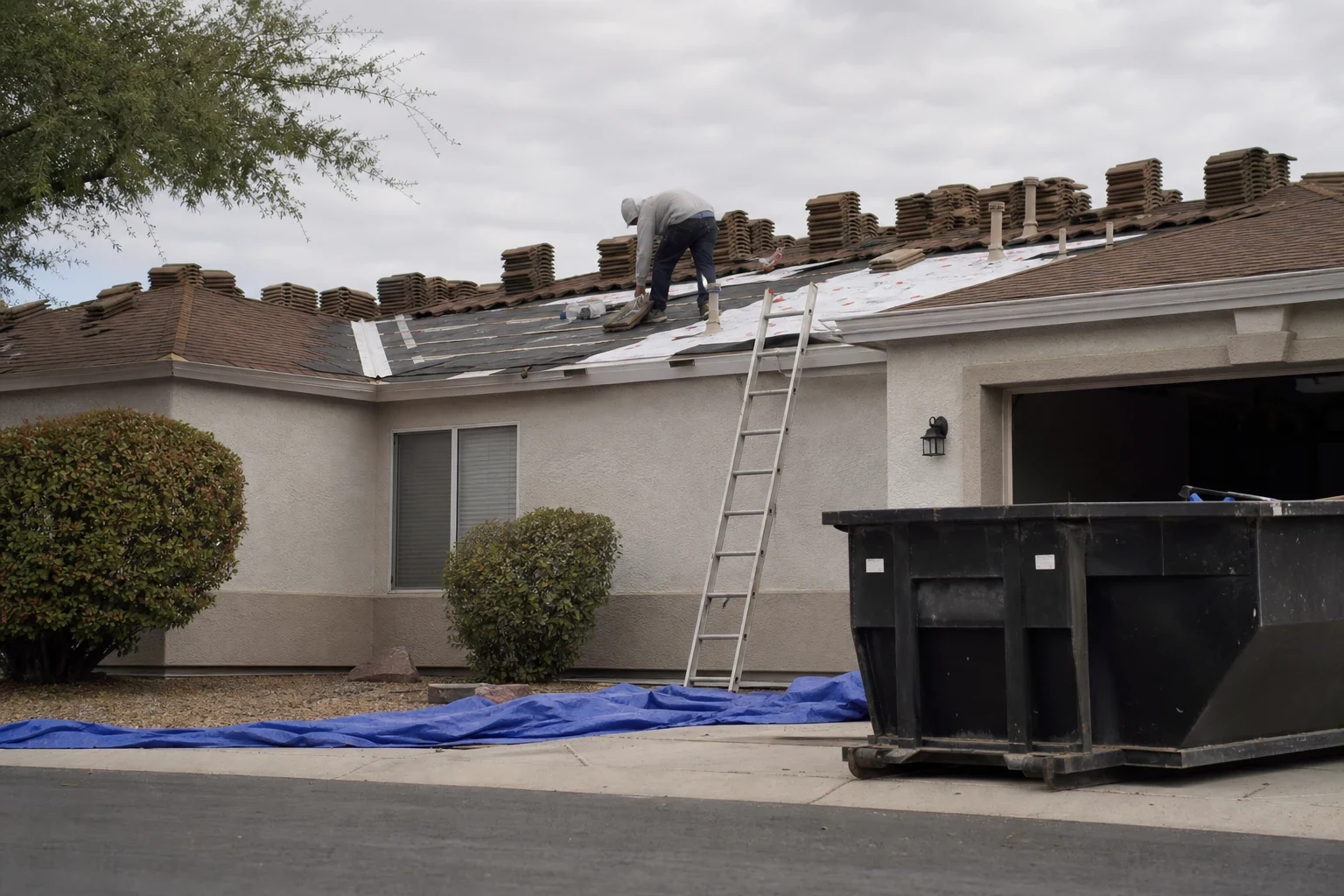
Monsoon wind can slide concrete tile, peel back shingles and drop palm fronds and patio pieces onto your roof. We come out, photograph what moved or broke, fix it properly and clear the debris from your roof, yard and gutters before we leave.
What storm damage repair covers here
Most storm damage we see in El Mirage comes from the summer monsoon. Microbursts and dust storms push hard on roof edges and ridges. Hail is less common, but it does happen, and it can crack tile or bruise shingles in a few minutes.
On the tile roofs common across the West Valley, the tile usually isn't the waterproof layer. The underlayment beneath it is. So a few slipped tiles can look minor from the street while the sun and rain go to work on the paper or felt underneath. Storm damage repair means fixing both the part you can see and the part you can't.
We also work in Youngtown, Surprise, Peoria, Glendale, Litchfield Park and Tolleson. If the damage turns out to be widespread, we will say so and talk through roof replacement. If it's a small spot, we treat it like a normal roof repair and keep it simple.
What the work includes
- A full look, not just the obvious spot
- We walk the whole roof, check the ridges, hips and edges where wind hits hardest, and look in the attic for stains or daylight. Storms rarely damage just one spot.
- Photos you keep
- You get dated photos of every broken tile, lifted shingle and torn underlayment area we find. Those photos help if you decide to file an insurance claim.
- Tile reset and replacement
- We reset slipped tile, replace cracked pieces with a matching profile and color where we can find one, and refasten ridge caps that the wind loosened.
- Shingle and underlayment repair
- Creased or missing shingles get replaced and sealed down. Where underlayment is torn or brittle, we patch or replace that section before anything goes back on top.
- Cleanup every day
- Broken tile, old nails, fronds and grit come off the roof and out of your yard each day. We run a magnet over the driveway and walkways, and we clear storm debris out of the gutters while we're up there.
Signs your roof took a hit
Tile pieces in the yard
Chunks of concrete or clay tile near the house mean something up top broke. Don't stand right under the eaves until it's checked.
Gaps or crooked rows
From the street, look for tiles that sit out of line or spots where you can see dark underlayment. That's where wind lifted or shifted them.
Shingles that look creased or missing
Wind can bend a shingle back without tearing it off. The crease breaks the seal, and the next storm takes it.
A new ceiling stain
A water spot that shows up after a monsoon rain is a good sign the underlayment is open somewhere. It may not be right above the stain.
Debris piled in valleys or gutters
Dust, leaves and broken pieces collect in valleys and gutters after a storm. That buildup holds water against the roof and should come out.
What changes the price
A storm repair can be a few tiles or entire sections of roof. We can't quote a fair price until we've walked the roof. These factors make the biggest difference.
How far the damage spreads
A torn ridge and ten slipped tiles is a quick job. Damage across several slopes means more material and more labor.
Shape the underlayment is in
When the underlayment below the tile is torn or sun-baked, that area needs to be redone. It's often what moves the price most.
Locating matching material
Certain older tile styles and colors are scarce. Tracking down matches or using salvaged tile can change the cost and the schedule.
Slope and reach
Steep roofs, two-story walls and narrow side yards slow things down and call for extra safety setup.
How a storm repair job goes
- 1
You call and we set a time
We get a few details about the storm and what you've noticed, then schedule a visit. The inspection is free.
- 2
Inspection and photos
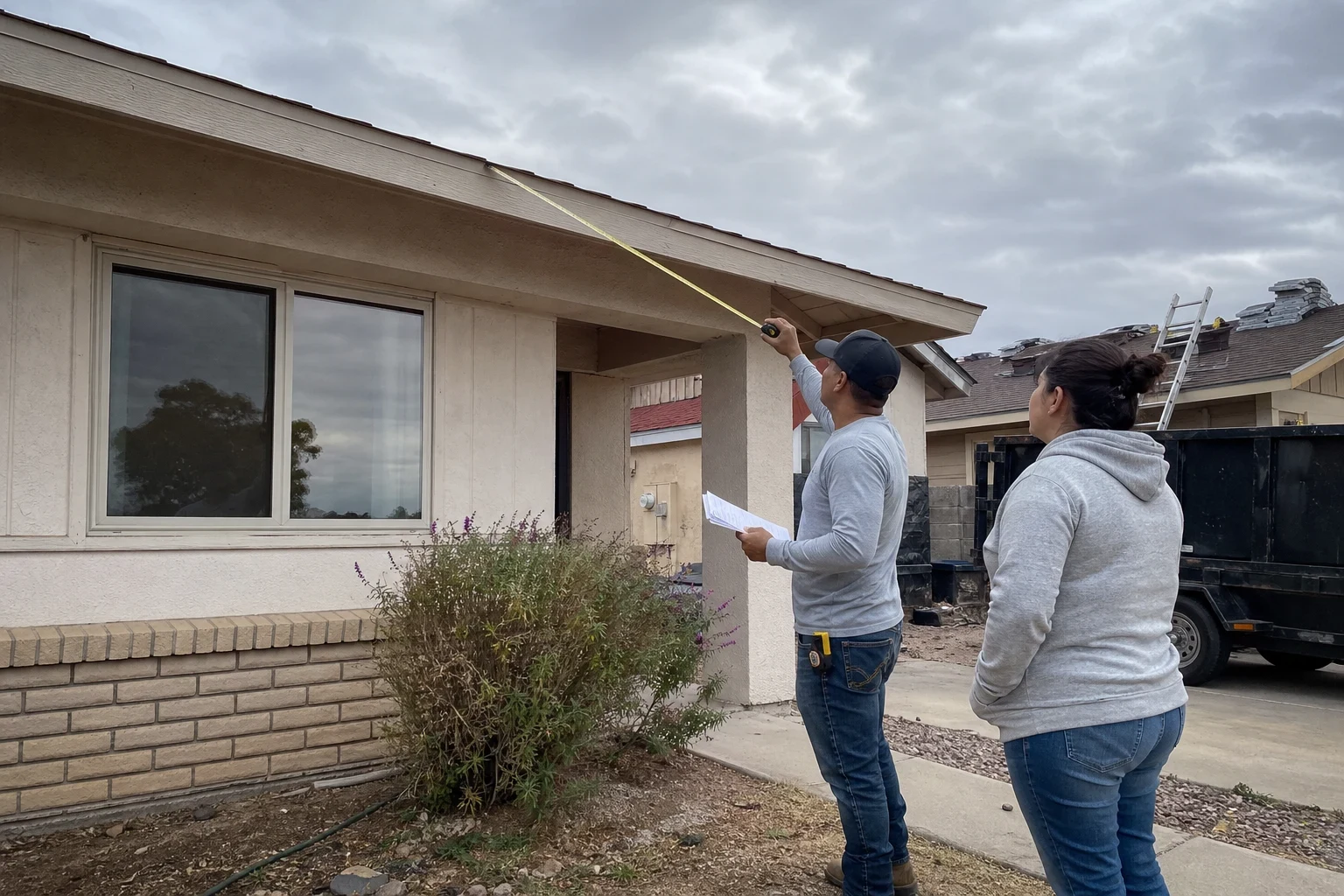
We go over the roof and attic, take photos and show them to you on the spot. You hear what's storm damage, what's normal wear and what can wait.
- 3
Written estimate
You get a written, line-item estimate. If you're filing a claim, you can share it and the photos with your insurance company. We explain how the process usually goes, but your adjuster makes the coverage call.
- 4
Repair day
We lay tarps over plants and the patio, set ladders away from doors, and stack pulled tile neatly on the roof or a tarp. Repairs go in, and the roof gets a final walk to make sure nothing else is loose.
- 5
Cleanup and walk-through
Debris gets hauled off, the yard and driveway are swept and magnet-checked, and we walk you around the house so you can see the finished work.
Storm damage questions
Will insurance pay for my storm damage?
It depends on your policy and what the adjuster finds. We give you clear photos and a written estimate you can send in. We can explain the usual steps, but we don't act as your adjuster or promise what a claim will cover.
A few tiles slipped. Can that wait?
It can wait a short while, but not long. With tile off, the underlayment is exposed to sun and rain, and the next monsoon storm can lift more tile from the same gap. A quick look tells you how much time you have.
Do I need a permit for storm repairs?
Small repairs usually don't need one. Larger work, like redoing big sections of underlayment or a reroof, may need a city permit. When it does, we pull it and schedule the inspection.
What happens to the broken tile and debris?
We haul it away. Broken tile, old fasteners, fronds and grit come off the roof, out of the gutters and out of your yard. We sweep and run a magnet before we leave each day.
How do I know it's storm damage and not just an old roof?
We'll tell you straight. Fresh breaks and wind-lifted edges look different from years of sun wear. If it's age, we'll say so, and we'll point you toward a roof inspection or repair plan instead.
Did the last monsoon hit your roof?
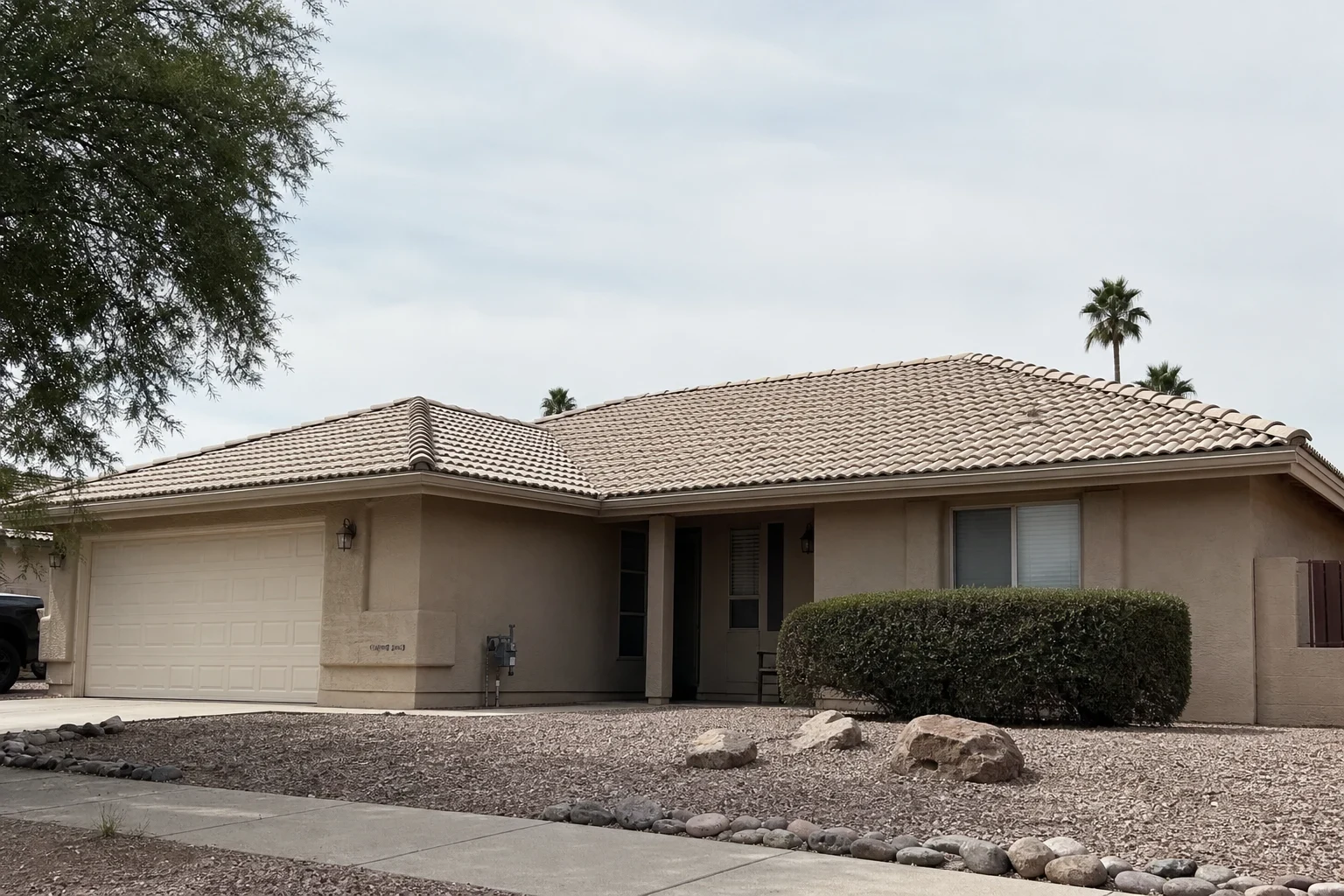
We'll come out, show you photos of what we find and write up an estimate. Once the repair is finished, your yard will be as clean as when we arrived.