ServicesRoof inspection
El Mirage Roof Inspections
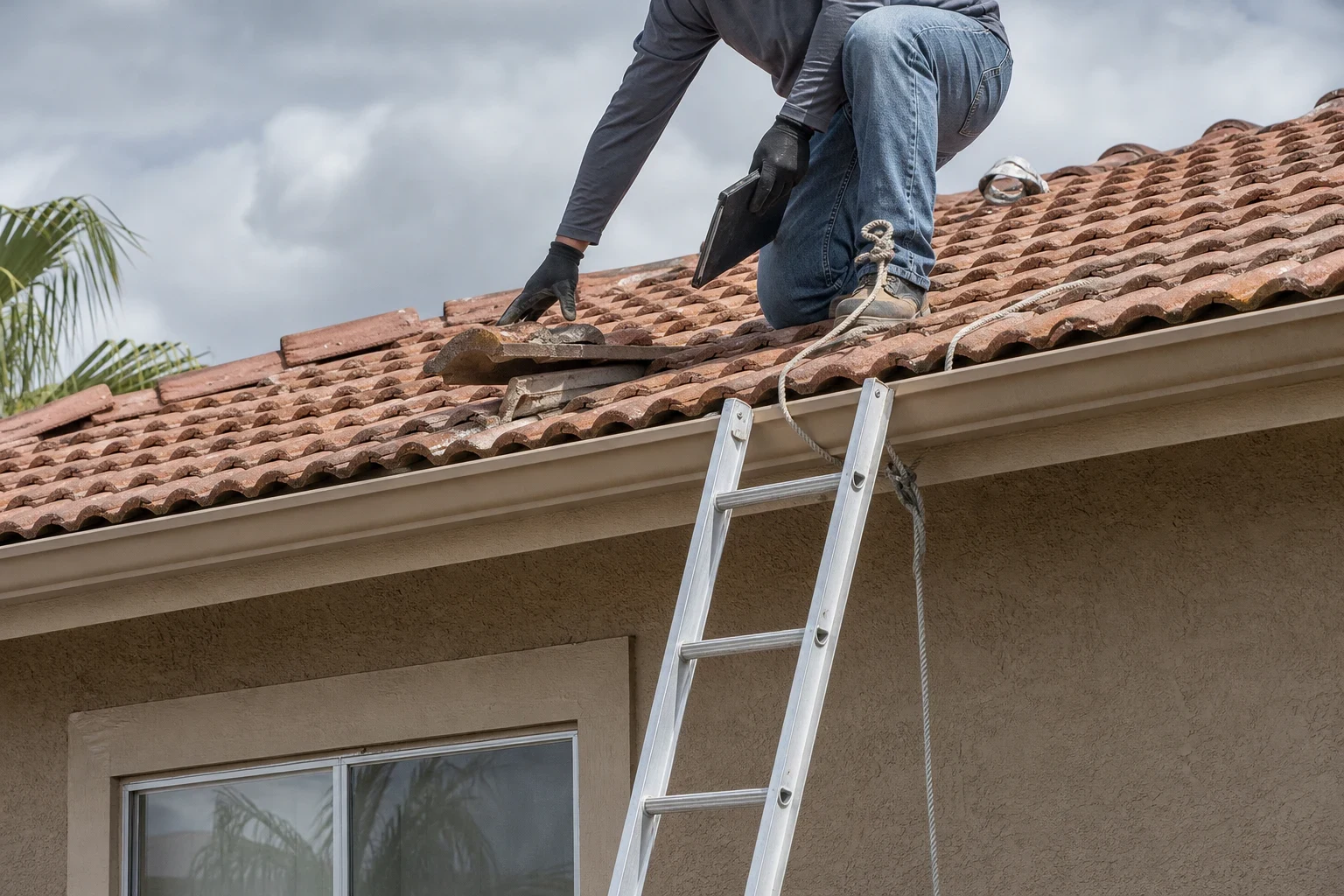
We go over your roof, check the attic and pay close attention to the places where desert roofs tend to give out. You get photos and a simple list of findings. We watch our footing, clean up behind us and leave the yard as we found it.
What You Learn From an Inspection
Around El Mirage, most roofs look fine from the street well after they've started wearing out. Concrete tile can go for decades, but the underlayment below bakes in summer heat and turns brittle long before the tile. Shingles fade and shed granules. Foam and coated flat roofs blister and crack as the coating thins. You can't see any of it from the driveway.
It makes sense to get one before buying or selling, after a hard monsoon storm, when a ceiling stain appears, or when an aging roof has you thinking ahead. We tell you what's in good shape, what needs work and what can wait. If a small fix is all it takes, we say that.
We treat your home as a job site we have to return clean. That means padded ladder feet, careful steps on tile, shoe covers in the attic and nothing left on the roof or in the yard.
What Every Inspection Covers
- The roof covering
- We check for missing, slipped or cracked tiles, lifted or worn shingles and blistered or soft areas on flat sections. On tile roofs, we lift a few pieces in key spots to look at the underlayment.
- Flashing and roof openings
- Leaks usually begin where something passes through the roof. We look at flashing along walls, chimneys and skylights, and the plumbing vent boots that crack in the sun.
- Valleys, edges and runoff
- Valleys handle the heaviest water in a monsoon downpour. We check them for wear and buildup, and inspect drip edge, fascia and gutters for rot or gaps.
- Attic and deck
- Inside, we check for daylight, water stains, wet insulation and weak airflow. Summer attic heat in the Phoenix area wears down everything above it faster.
- Equipment on the roof
- Plenty of local homes have AC units or evaporative coolers up top. We inspect the curbs and seals beneath them, because a leaking cooler line can soak a roof for months.
- Photos with written notes
- Each problem comes with a clear photo and a brief note on what it is and how soon it needs attention. Plain language, and no stack of extra sales.
Signs It's Time to Have Your Roof Looked At
Stains on ceilings or walls
A brown ring on the ceiling means water got in somewhere. The wet spot inside is often several feet from the actual opening on the roof.
Broken or shifted tiles
Tiles crack when someone walks on them wrong or a branch hits them. One broken tile lets sun and rain reach the underlayment below.
Granules in the gutters
If your downspouts dump sand-like grit, your shingles are wearing thin. That is normal with age, but it tells you where the roof is in its life.
After a monsoon storm
Strong wind and heavy rain can lift edges, move tiles and tear flashing. A look after the season catches small damage before next year's storms find it.
Buying, selling or refinancing
Buyers and lenders want to know the roof's condition. A clear report with photos keeps surprises out of the deal.
What Affects the Cost of an Inspection
An inspection is a few hours of careful work, not a full project, so the price stays modest. What changes it is how long the roof takes to check safely and how much detail you need on paper. We tell you the price before we schedule.
Roof type
Tile takes longer to walk safely than shingles, and lifting tiles to check underlayment adds time. Flat foam or coated roofs need close attention to the coating.
Size and pitch
A large two-story home with steep slopes and several sections takes more time and more safety setup than a single-story ranch.
Attic access
A tight hatch, low clearance or a garage-only access point can slow the attic check. Homes with no attic access get a roof-only look.
Report detail
A quick check after a storm is simpler than a full written report for a home sale, which takes more photos and notes.
How Inspection Day Goes
- 1
We set a time that works
You tell us what you have noticed and when you will be home. We will need attic access, so it helps to clear a path to the hatch.
- 2
Ground walk first
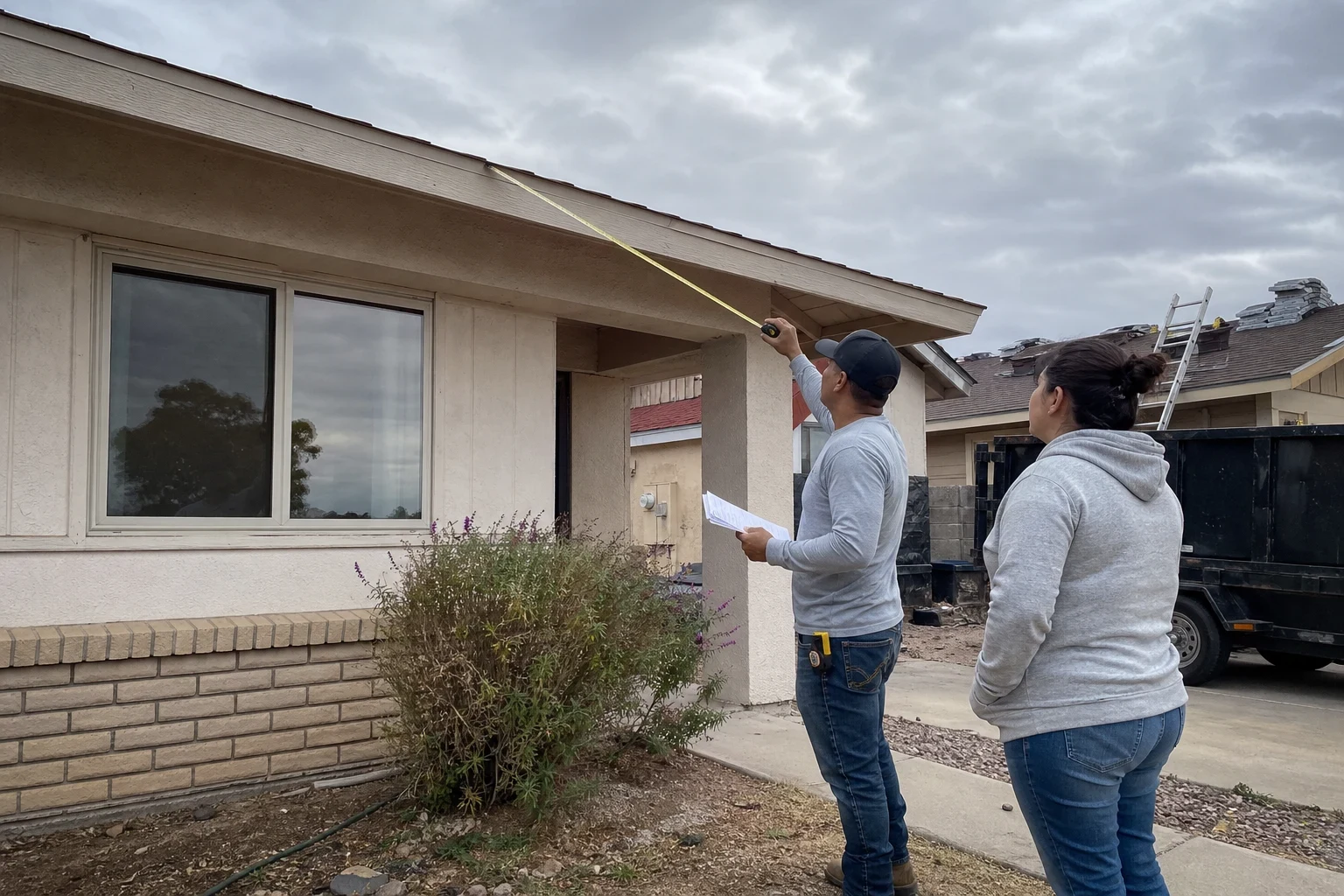
We start outside, looking at the roofline, gutters, fascia and any stains on the stucco. Then we set the ladder on pads so it won't mark your driveway or walls.
- 3
On the roof
We walk where tile is supported to avoid cracking it, and we photograph what we see as we go. Any loose debris we find up there comes down with us.
- 4
In the attic
We wear shoe covers inside, lay a drop cloth under the hatch and check for moisture, light and airflow. Insulation stays where it belongs.
- 5
Findings, then options
We go over the photos with you before we leave and follow up in writing. If something needs roof repair or a bigger job, we explain why and let you decide.
Questions About Inspections
How much time does an inspection take?
For most houses, one to two hours. Bigger homes and tile roofs can run a little longer. We'll give you an estimate when you book.
Can walking on tile crack it?
A wrong step can crack tile. We only put weight where the tile is supported and stay off the thin edges. If anything cracks while we're there, we'll tell you and repair it.
Does someone need to be home?
Yes, for at least part of the visit, since we need attic access. It's also useful to look through the photos together before we go.
How often should a roof be inspected?
Every year or two is a good routine here, plus after a heavy monsoon season. Older roofs and tile roofs over twenty years old deserve a closer eye.
Are you going to push a new roof?
No. Lots of roofs only need some tiles reset, new vent boots or new flashing. We raise roof replacement only when the underlayment or decking is really worn out, and we show you the photos so you can decide.
Do you inspect roofs beyond El Mirage?
Yes. We also cover Youngtown, Surprise, Peoria, Glendale, Litchfield Park and Tolleson.
Find Out Where Your Roof Stands
We'll check it top to bottom, show you what we found and leave your home clean. From there, you decide what comes next.